Gravel Roads & Drives · Giles, Montgomery & Pulaski Counties
Gravel drives built to survive a New River Valley winter
A gravel drive that washes out every spring is almost never a stone problem — it is a drainage problem. Water running down the surface instead of off it will strip a drive no matter how much gravel you put on top, which is why we start with the grade and the run-off rather than with a delivery of stone. We build and repair gravel driveways and access roads across rural Giles, Montgomery and Pulaski counties: shaping a proper crown so water sheds to the sides, cutting ditches and setting culverts where they are needed, laying a base course before the surface course, and compacting it so it stays put. Long farm and hunting-property access roads are routine work for us, not an exception.
What's included
How we approach a drive, whether it's new or a repair.
- Walk the full length — grade, low spots, and where the water is actually going
- Drainage first — crown, ditching and culverts before any stone is ordered
- Base course where the ground won't hold a surface layer on its own
- Surface stone spread to the right depth rather than tipped and pushed
- Grading and compaction so the drive holds its shape under traffic
- Pothole and washout repair on existing drives — not every job needs a rebuild
What drives the price
Priced by the job after we've walked it. These are the factors that move the number.
- Length and width — the single biggest factor, and the easiest to measure
- Condition of what's there — a re-grade costs far less than building up from bare ground
- Grade and terrain — steep runs need more drainage work and hold stone less easily
- Drainage work required — ditching, culverts and pipe are separate materials
- Stone type and tonnage — base and surface courses are different material at different rates
- Equipment access — whether machinery can get to the whole run
How the job runs
-
Step 1
Tell us the problem
Washing out, potholed, soft in wet weather, or a new drive from scratch.
-
Step 2
We walk the length
Grade, low spots and drainage — we look at where the water goes first.
-
Step 3
You get a written price
Stone, drainage work and machine time, itemised. Free and no obligation.
-
Step 4
We build or repair it
Shape, stone, grade and compact — then you drive on it.
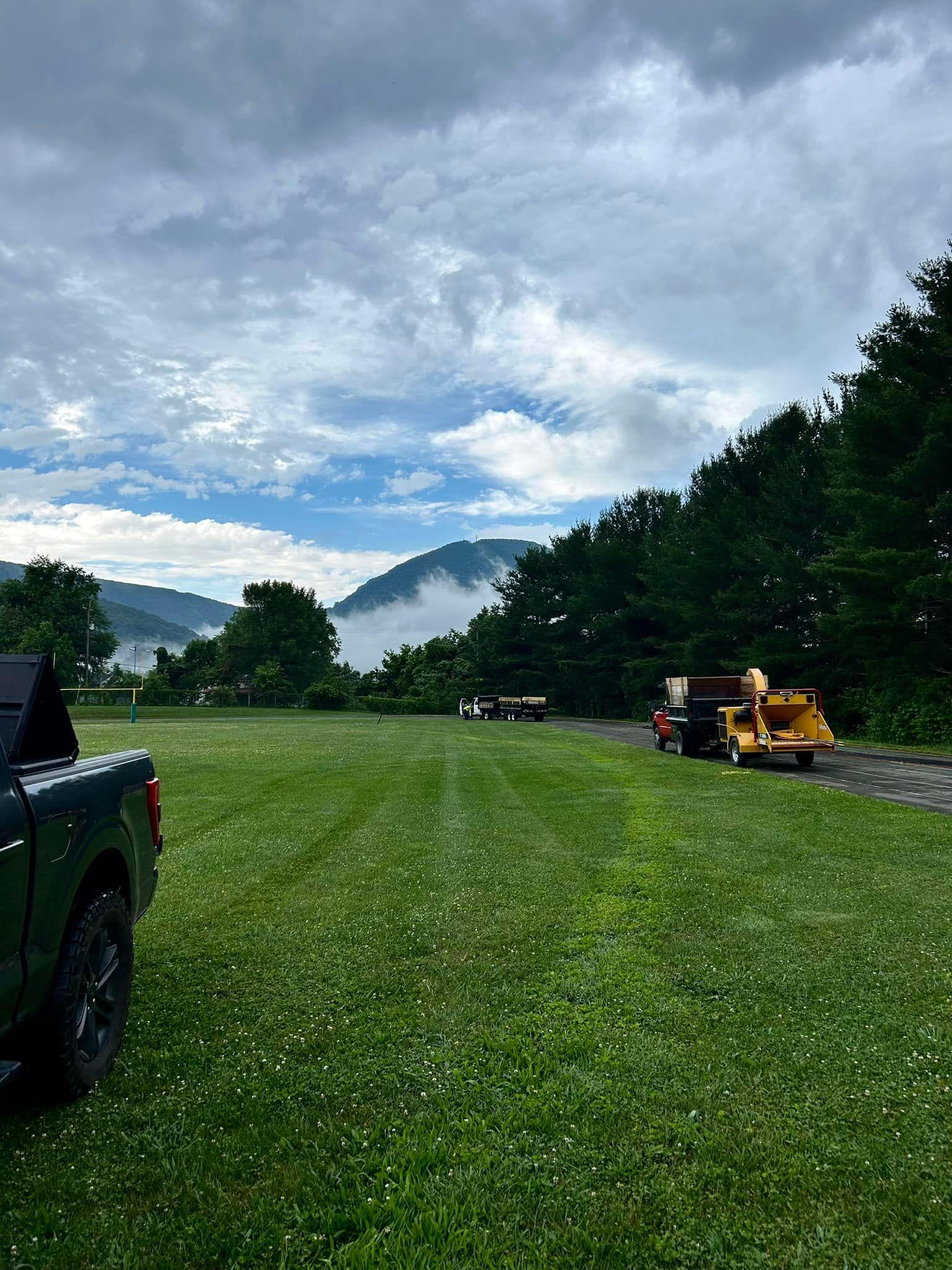
Trucks, trailers and chipper staged along the access track — road work is equipment work.
How we work
The right machine on site, and a crew that turns up
Gravel road work is equipment work. Shaping a crown, cutting a ditch line, setting a culvert and compacting a surface all need the right machine on site and someone who knows how to run it — which is why a drive built properly holds up and one that was simply topped with stone does not. It is also work that depends on the crew arriving when they said they would, because a half-graded drive is worse than the one you started with.
-
The work
Drives & access roads
-
Starts with
Drainage, not stone
-
Covering
Giles, Montgomery, Pulaski
“Great job today by NRV! State of the art equipment, friendly and professional! Highly recommended!”
Ray P. · Google review
- Insured
- Bonded
- Family & locally owned
- Rural & farm access roads
- 70+ five-star Google reviews
Gravel road questions
What people ask us about gravel drives and access roads
Rural drives in this part of Virginia take a beating from run-off and freeze-thaw. These are the questions that come up most.
How much does a gravel driveway cost?
It is priced per job after we have walked the length, because two drives of the same size can be very different pieces of work. The main factors are how long and wide the drive is, what condition the existing base is in, how steep the run is, how much ditching or culvert work the drainage needs, and how many tons of stone it takes. Re-grading and topping up an existing drive is a much smaller job than building one from bare ground. We give you a written price that separates the stone, the drainage work and the machine time so you can see where the money goes.
Why does my gravel driveway keep washing out?
Almost always because water is running along the drive instead of off it. If the surface is flat or dished rather than crowned, every rainfall turns the drive into a channel and carries your stone downhill. Adding more gravel on top of that does not fix it — it just gives the water more to move. The fix is shaping a proper crown so water sheds to both sides, cutting or clearing ditch lines to take it away, and setting culverts where the run-off crosses. Get the water right and the stone stays where you put it.
Can you repair a drive rather than rebuild it?
Usually, yes, and it is the first thing we look at. A lot of drives that feel finished just need re-grading, the crown re-established, the ditches cleared and a top-up of surface stone. A full rebuild with a new base course is only necessary when the ground underneath will not hold a surface layer any more. We will tell you which one you are looking at when we walk it, and we would rather quote you the repair if the repair will hold.
What kind of gravel do you use?
It depends on the layer and the job. A base course uses larger, angular stone that locks together and carries the load; a surface course uses smaller material that packs down and drives comfortably. Rounded river gravel looks fine but rolls under tyres and migrates, so it is generally the wrong choice for a drive that gets used. We will tell you what we are proposing and why, and the tonnage will be on the written estimate.
Do you build access roads for farms, timber and hunting land?
Yes — longer rural access roads are routine work for us across Giles, Montgomery and Pulaski counties. Those runs are usually about grade and drainage more than surface finish, and they often need culverts at the crossings. If a stretch is too soft or too steep to hold stone as it is, we will say so when we walk it rather than build something that fails in the first wet season.
Do you do the tree and brush clearing for a new drive as well?
Yes. Because we do tree work and land clearing as well, a new drive or access road that needs a line cut through trees and undergrowth can be handled as one job by one crew rather than coordinating two contractors. Tell us that is what you need when you call and we will quote the clearing and the roadwork together.
How often should a gravel drive be re-graded?
It depends on traffic, grade and how good the drainage is, but a drive that is crowned and draining properly needs attention far less often than one that is not. If you are seeing ruts forming, potholes returning in the same spots, or stone piling up along the edges, those are the signs it is due. Fixing it at that point is a grading job; leaving it until the base is exposed turns it into a rebuild.
/filters:strip_exif()/filters:no_upscale()/media/5e46bc3f-368f-4ba7-8443-775e7a643573.jpeg)
/filters:strip_exif()/filters:no_upscale()/media/f242d3c3-a1fc-407b-b6e2-760dff500717.jpeg)